◇ Case study / 01 · 2026
TopStocx
Algorithmic trading platform
◇ The problem
What we were trying to solve
Wall Street Jr needed an institutional-grade retail trading platform for the GCC and Indian retail-investor market. The category leaders — TradingView, eToro, Plus500 — have 80+ DR, decades of content, and engineering teams of 50+. Could a solo engineer ship a credible competitor in months, not years?
◇ The solution
How it shipped
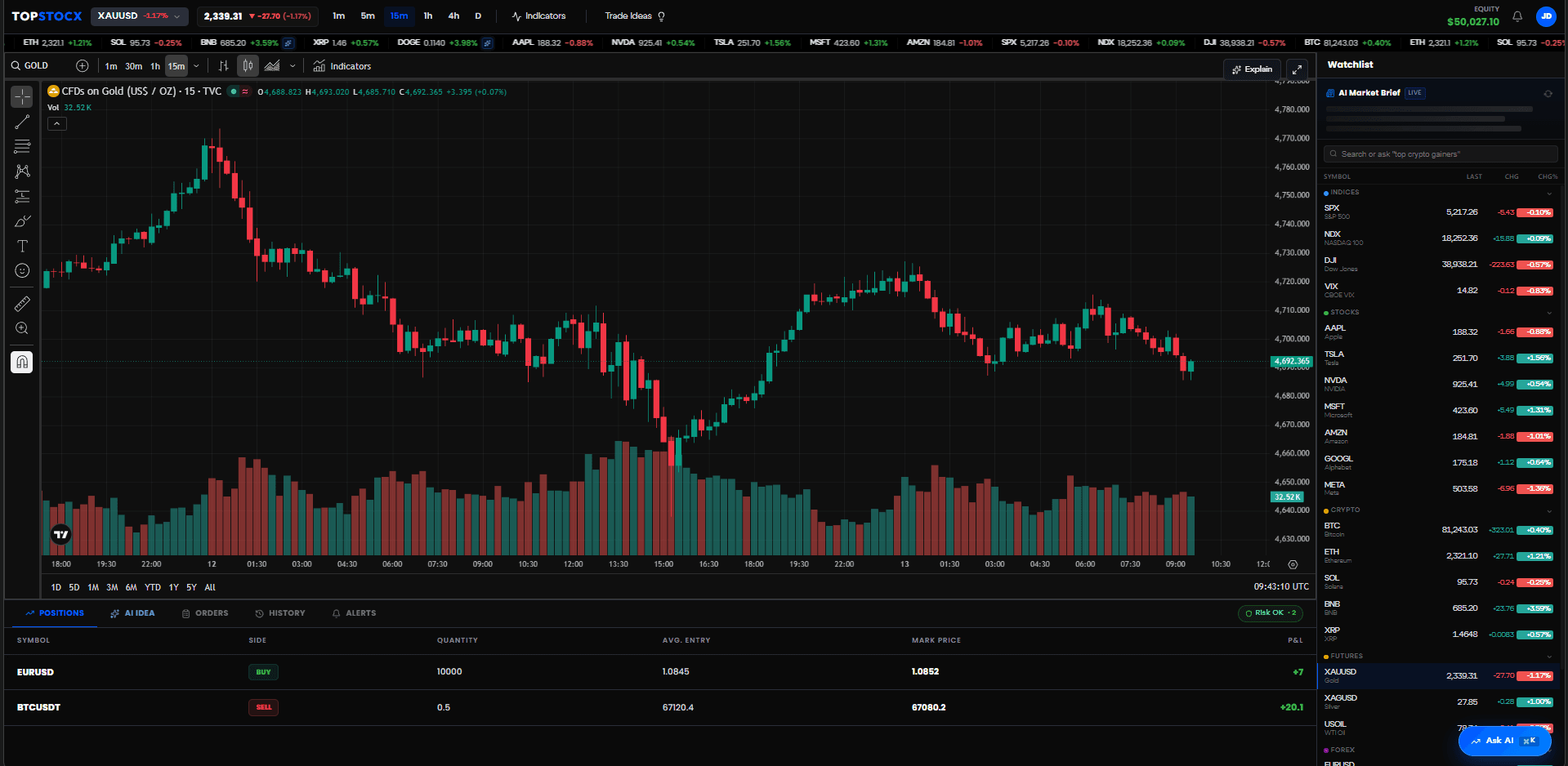
Use agentic AI tooling (Claude Code, Google Antigravity) to collapse a normal small-team build into one engineer's velocity. Integrate the best-in-class components rather than rebuild them: TradingView Advanced Charts widget for charting, Leverate broker API for tick data and order routing, Supabase for auth + per-user state with Row-Level Security, Claude API for the in-platform AI assistant. Differentiate on AI + copy trading + market intelligence — not on chart sophistication.
◇ Decisions
Engineering choices worth flagging
TradingView widget vs custom charts
Building parity with TradingView (250+ indicators, every drawing tool, multi-timeframe sync) would have taken 12–18 months and still been worse. The widget integrates with our data feed and our auth, so we got world-class charts on day 1 and spent build time on the differentiators.
Supabase over Firebase
Real Postgres + Row-Level Security. RLS pushes per-user authorisation logic into the database itself, so a bug in app code can't accidentally show user A's watchlist to user B. With Firebase we'd have written the same check repeatedly across every query — and missed it sometimes.
Next.js + Vite split
Marketing pages need SEO and fast first paint — that's Next.js with SSR. The /chart trading app is a logged-in SPA with a heavy chart widget and websocket feeds — it doesn't benefit from SSR and Vite's HMR is dramatically faster for the build loop. Two app folders, one Vercel project, sub-routing handles the rest.
◇ Results
What shipped
◇ Stack
Tools used
◇ Keep exploring